


Introduction
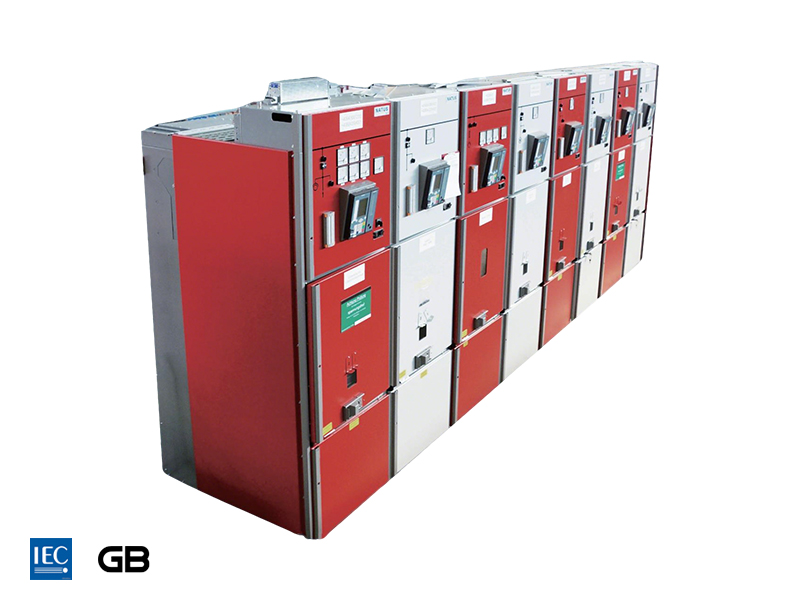
Withdrawable switchgear and fixed switchgear differ mainly in how the main switching components are installed, isolated, maintained, and replaced. Withdrawable switchgear uses a movable truck or chassis that allows designated components, such as circuit breakers, to move between specified operating positions. Fixed switchgear has its main switching components permanently mounted inside the enclosure.
Both designs are widely used in electrical power distribution systems. The right choice depends on rated voltage, short-circuit requirements, maintenance strategy, installation space, operational continuity, and budget.
NATUS Electric provides power distribution equipment for utility, industrial, and infrastructure applications. For electrical engineers, EPC contractors, facility managers, and procurement teams, understanding the differences between withdrawable and fixed switchgear helps ensure that the selected equipment meets both technical requirements and long-term operational needs.
1. What Is Withdrawable Switchgear?
Withdrawable switchgear is designed with movable switching units, commonly circuit breakers, mounted on a withdrawable truck or chassis. This arrangement allows the unit to be moved between designated positions without dismantling the entire switchgear assembly.
It is commonly considered for medium-voltage distribution systems where maintenance access, component replacement, and operational flexibility are important.
How Does Withdrawable Switchgear Work?
In a typical withdrawable switchgear design, the circuit breaker is installed on a truck that fits into a dedicated compartment. The truck and its associated mechanisms allow the circuit breaker to occupy specific positions defined by the manufacturer.
These positions commonly include:
Connected position: The circuit breaker is connected to the main circuit and can perform its intended switching function.
Test position: The main circuit connections are separated as designed, while specified control or testing functions may remain available.
Disconnected or isolated position: The circuit breaker is separated from the relevant main circuit connections according to the equipment design.
The exact position names, electrical connections, interlocks, and permitted operations vary by product.
Withdrawable mechanisms can make certain inspection, testing, and replacement tasks more convenient. However, moving a circuit breaker to a test or disconnected position does not automatically make the equipment safe for maintenance. Personnel must follow the manufacturer's instructions and all applicable isolation, verification, earthing, and lockout/tagout procedures.
Key Characteristics of Withdrawable Switchgear
Movable switching units: Designated components can be moved between specified positions using the equipment's withdrawable mechanism.
Flexible maintenance arrangements: The design can facilitate certain inspection and replacement tasks without requiring the entire assembly to be dismantled.
Defined operating positions: Connected, test, and disconnected positions support specific operating and maintenance procedures.
Additional mechanical components: Trucks, guide rails, interlocks, and primary disconnect contacts may require inspection and maintenance.
Space for withdrawal operations: The installation layout must provide sufficient clearance for operating and removing the withdrawable unit where required.
Withdrawable switchgear is particularly worth evaluating when maintenance access and replacement procedures are important parts of the facility's operating strategy.
2. What Is Fixed Switchgear?
Fixed switchgear is a type of switchgear in which the main switching components are permanently installed inside the enclosure rather than mounted on a withdrawable truck.
Depending on the design, fixed switchgear may use fixed-mounted circuit breakers, switches, or other switching devices. The method of electrical isolation and access for maintenance depends on the equipment configuration.
Fixed switchgear can be used in many industrial and commercial power distribution systems where its electrical ratings, installation requirements, and maintenance arrangements meet the project specification.
How Does Fixed Switchgear Work?
In fixed switchgear, the main switching component is secured in its designated position. It operates according to the equipment's control and protection system, but it is not moved between connected and disconnected positions using a withdrawable truck.
Before maintenance, the relevant circuit must be isolated using the designated switching and isolation devices. Personnel must verify the absence of voltage, apply earthing where required, and follow the manufacturer's safety procedures.
Although fixed switchgear does not use the same withdrawable mechanism, it can still be designed with appropriate isolation facilities and maintenance access. The actual arrangement depends on the product.
Key Characteristics of Fixed Switchgear
Fixed installation: The main switching unit remains mounted in its designated position during normal operation and maintenance procedures that do not require its removal.
Potentially simpler mechanical arrangement: Designs without withdrawable mechanisms may have fewer associated moving parts.
Product-dependent maintenance: Inspection, repair, and replacement procedures depend on the equipment's internal layout and isolation provisions.
Space planning: The installation may not need the same withdrawal clearance as a comparable withdrawable design, although access for servicing and component replacement is still necessary.
Configuration-dependent cost: Some fixed configurations may have a lower initial purchase price, but total cost depends on the full equipment specification.
Fixed switchgear may be suitable for projects where the required electrical performance can be achieved with a fixed arrangement and the maintenance strategy accommodates its design.
3. Withdrawable vs. Fixed Switchgear: Key Differences
The main difference between withdrawable and fixed switchgear is the installation and isolation arrangement of the switching unit. This affects maintenance access, component replacement, mechanical complexity, space planning, and lifecycle considerations.
| Comparison Factor | Withdrawable Switchgear | Fixed Switchgear |
|---|---|---|
| Installation design | Switching unit is mounted on a withdrawable truck or chassis | Switching unit is fixed inside the enclosure |
| Isolation arrangement | Designed to move the unit to specified test or disconnected positions | Isolation depends on the installed switching and isolation devices |
| Maintenance access | Can facilitate certain inspection and replacement tasks | Maintenance is performed according to the fixed equipment's design |
| Component replacement | The withdrawable unit may be removed after the required safety procedures | Replacement may require in-place work or disassembly, depending on design |
| Mechanical complexity | Includes a withdrawal mechanism and associated components where applicable | May have fewer withdrawal-related mechanical components |
| Initial cost | May be higher due to the withdrawal mechanism and associated design | May be lower for comparable configurations, but not always |
| Space requirements | May require additional clearance for withdrawal and handling | May require less withdrawal clearance, but still needs maintenance access |
| Maintenance planning | Can support flexible procedures for designated components | Requires procedures suited to the fixed installation |
| Operational continuity | May support faster component replacement in suitable configurations | Depends on isolation arrangements, redundancy, and replacement procedures |
| Selection priority | Often considered when maintenance flexibility is important | Often considered when a fixed arrangement meets technical and operational needs |
Differences in Maintenance and Downtime
Withdrawable switchgear can simplify certain maintenance tasks because the designated switching unit can be moved to a specified position and, where the design permits, removed after proper isolation.
For example, if a withdrawable circuit breaker requires replacement, a compatible spare unit may be installed following the manufacturer's procedure. This can reduce the amount of work required on the installed unit itself.
With fixed switchgear, a circuit breaker or other major component may need to be serviced or replaced in place, or removed through a different disassembly procedure. The actual work depends on the equipment design.
However, withdrawable switchgear does not automatically eliminate downtime. The duration of an outage also depends on the availability of spare components, system redundancy, isolation requirements, fault conditions, personnel training, and maintenance planning.
For facilities where supply continuity is critical, engineers should evaluate the complete distribution system rather than relying solely on the switchgear installation type.
Differences in Cost and Installation Space
Withdrawable switchgear includes additional mechanical components, such as the truck, guide mechanism, and associated interlocks. These features may increase the initial equipment cost compared with some fixed configurations.
However, purchase price alone does not determine the most economical solution. Maintenance frequency, replacement procedures, spare-unit strategy, labor costs, and the operational impact of planned outages can all affect lifecycle cost.
Space requirements also vary. Withdrawable equipment may need additional clearance for operating and removing the unit. Fixed switchgear may avoid this particular requirement, but sufficient access for inspection, repair, and component replacement remains essential.
A fair comparison should therefore use equivalent voltage ratings, current ratings, short-circuit performance, protection functions, enclosure requirements, and accessory configurations.
4. Advantages and Limitations of Withdrawable Switchgear
Advantages of Withdrawable Switchgear
1. Flexible Maintenance Arrangements
Withdrawable switchgear can provide designated test and disconnected positions that support defined inspection and maintenance procedures. This may be beneficial in facilities where equipment servicing is a regular operational requirement.
2. Convenient Component Replacement
Where the design allows, a circuit breaker can be removed from its compartment after the required isolation and safety procedures. A compatible spare unit may then be installed according to the manufacturer's instructions.
This arrangement can simplify some replacement tasks compared with equipment that requires major in-place disassembly.
3. Support for Maintenance Planning
Facilities can plan inspection, testing, and replacement activities around the equipment's designated operating positions. In suitable systems, a spare breaker strategy may also help improve maintenance flexibility.
The actual benefit depends on the system architecture, compatibility of spare units, and availability of qualified personnel.
Potential Limitations of Withdrawable Switchgear
Higher initial investment: The withdrawal mechanism and associated components can increase equipment cost, depending on the design.
Additional mechanical maintenance: Trucks, guide rails, contacts, and interlocks may require periodic inspection and servicing.
Space and handling requirements: The layout must accommodate the movement and removal of the withdrawable unit where applicable.
Operating procedure requirements: Personnel must understand the equipment's interlocks, permitted operating sequences, and safety requirements.
Withdrawable switchgear is not necessarily the best choice for every installation. Its benefits should be assessed against the project's maintenance needs and total cost.
5. Advantages and Limitations of Fixed Switchgear
Advantages of Fixed Switchgear
1. Potentially Simpler Mechanical Design
Because the main switching unit is fixed in position, the equipment may not require the truck and withdrawal mechanisms used in withdrawable designs.
This can simplify certain aspects of the equipment structure, although the overall design complexity still depends on the product's switching, isolation, and protection functions.
2. Potentially Lower Initial Cost
Some fixed switchgear configurations may have a lower purchase price than comparable withdrawable designs. The actual difference depends on voltage rating, current rating, short-circuit performance, enclosure, and accessories.
Procurement teams should compare technically equivalent products before making a cost decision.
3. Suitable for Planned Maintenance Strategies
Fixed switchgear can be a practical option where maintenance intervals and outage windows are clearly defined, and the equipment's isolation and servicing arrangements meet operational requirements.
Potential Limitations of Fixed Switchgear
Component access may be less flexible: Depending on the design, major components may require more in-place work or disassembly during replacement.
Maintenance procedures are design-specific: Isolation, testing, and servicing must follow the equipment's designated procedures.
Outage planning remains important: Where a component cannot be replaced without affecting a circuit, system redundancy and maintenance scheduling become particularly important.
Fixed switchgear is not inherently less reliable or less safe than withdrawable switchgear. Its suitability depends on its design, specifications, installation, and maintenance practices.
6. Which Type of Switchgear Is Better for Your Application?
There is no universal answer to whether withdrawable or fixed switchgear is better. The decision should reflect the facility's electrical requirements, maintenance strategy, available space, operational continuity targets, and budget.
When Should You Choose Withdrawable Switchgear?
Withdrawable switchgear is worth considering when:
Maintenance teams need convenient access to designated switching units.
The facility performs regular inspections or component replacement.
The project requires defined connected, test, and disconnected positions.
A compatible spare-unit strategy is part of the maintenance plan.
The operational benefits of flexible maintenance justify the additional equipment cost and space requirements.
Typical applications may include industrial facilities, utility distribution installations, and infrastructure projects where maintenance access and replacement planning are important.
These are selection considerations rather than universal rules. The final choice must be based on the available product design and project specifications.
When Should You Choose Fixed Switchgear?
Fixed switchgear may be suitable when:
A fixed-mounted arrangement meets the electrical design requirements.
The facility has a maintenance plan that accommodates the equipment's isolation and servicing procedures.
The project prioritizes a straightforward installation arrangement.
The selected configuration meets the available space and budget requirements.
Component replacement and planned outages can be managed within the facility's operating strategy.
Fixed switchgear can serve a wide range of power distribution applications. It should be selected based on verified technical performance rather than an assumption that all fixed designs have lower costs or simpler maintenance.
7. How to Select the Right Medium-Voltage Switchgear
Choosing between withdrawable and fixed switchgear is only one part of the procurement process. The selected equipment must also meet the electrical, environmental, and operational requirements of the installation.
Verify Electrical Ratings
Check the rated voltage, rated current, insulation level, rated short-circuit breaking current, and rated short-time withstand current. These parameters must match the electrical design and applicable project standards.
Do not assume that withdrawable and fixed versions of a product family have identical ratings. Confirm the specifications of the exact model and configuration being quoted.
Evaluate Maintenance and Replacement Requirements
Identify the components that require routine inspection, testing, or replacement. Ask the supplier how the design supports these tasks and what isolation procedures are required.
For withdrawable designs, confirm the available operating positions, interlocks, removal procedure, and compatibility requirements for spare units. For fixed designs, review the access and disassembly requirements for the components that may need servicing.
Review Safety Features and Operating Procedures
Confirm that the proposed switchgear provides the isolation and safety features required by the project specification. Review the manufacturer's operating instructions, interlock design, earthing provisions, and maintenance procedures.
Switchgear must be operated and serviced by qualified personnel following applicable electrical safety rules. Neither installation type removes the need for correct isolation and verification before maintenance.
Compare Total Lifecycle Cost
A sound purchasing decision should consider more than the initial quotation. Compare:
Equipment purchase price
Installation and commissioning
Routine inspection and maintenance
Spare parts and component replacement
Required maintenance labor
Planned outage arrangements
Expected service life and technical support
For facilities where downtime has a substantial operational cost, maintenance flexibility and system redundancy may be as important as the initial equipment price.
8. NATUS Electric Switchgear Solutions
NATUS Electric provides power distribution equipment for utility, industrial, and infrastructure applications. When evaluating NATUS products, buyers should review the technical documentation for the specific switchgear series and confirm whether the proposed configuration uses a withdrawable or fixed installation.
The following information can help determine whether a product is suitable for a particular project:
Rated voltage and rated current
Rated short-circuit breaking current and rated short-time withstand current
Circuit breaker installation and isolation arrangement
Protection and control configuration
Degree of protection and installation conditions
Applicable standards and test documentation
Maintenance procedures and spare parts availability
The available structure and options may differ between product series and voltage ratings. Buyers should therefore verify the exact configuration with NATUS Electric rather than assuming that all models use the same installation arrangement.
Explore NATUS Switchgear Solutions
Review the relevant product information to compare switchgear options for your power distribution project.
Conclusion
Withdrawable and fixed switchgear are two installation approaches designed to meet different operational and maintenance requirements. Withdrawable switchgear can provide greater flexibility for certain inspection, isolation, and replacement tasks, while fixed switchgear may offer a straightforward installation arrangement that suits projects with compatible maintenance plans.
The best option depends on electrical ratings, operational continuity, maintenance procedures, installation space, safety requirements, and total lifecycle cost. By comparing the specifications of the exact equipment models, project engineers and procurement teams can select a solution that meets both immediate installation needs and long-term operating objectives.
NATUS Electric offers power distribution equipment for a range of applications. Review the relevant product documentation and contact the company to discuss the switchgear configuration that best fits your project.